The Midwest’s climate is H-A-R-S-H on roofs. We get ice, hail, sleet, and snow from December through April and UV-baked roofs from June through August. Midwest commercial buildings take a beating every season.
When you are looking to replace or restore your metal roof, the goal is not solely patching leaks—it includes ensuring roof performance in both heat and cold, extending roof life, and cutting business interference.
Every good roof is a weather-tested investment. So, it’s best to choose a roof system that has been tested in our specific climate.
Metal roofs are prevalent in the Midwest which shows their capability to withstand our climate, but they are expensive to replace. When a metal roof needs to be replaced, another option is a metal restoration roofing system. We have installed metal restoration roofing systems all over buildings in western Wisconsin, northern Iowa, and southeastern Minnesota for the past 10 years.
Let’s first examine what weather the roof endures.
The Midwest Weather Gauntlet: What Your Roof Faces Each Year
Here’s a typical year in the Midwest:
Temperature Swings Over 100°F
Midwest roofs resist temperatures ranging from 100°F in the summer to -40°F in the winter.
The expansion and contraction that occurs with those temperature swings can crack roofs and loosen fasteners causing leaks.
Quick temperature swings can also cause condensation inside the building which can wreck insulation and weaken the internal building structure.
Average Snowfall of 40–60 inches
The weight of 3’ to 5’ of snow every winter causes recurring structural stress on the roof.
Then when the snow melts, ponds of water can form if roof is slopped improperly which causes mold and mildew to grow.
High humidity and UV Exposure
Humid summers cause the metal to corrode and condensation to form inside the building if there is insufficient insulation and ventilation.
The sun also beats on roofs in the summer which causes accelerated material breakdown.
When you add wind-driven rain, snowmelt cycles, and hail, it’s no surprise that many roofs fail years before their warranty ends! But failure doesn’t have to mean a tear-off or an expensive new metal roof.
To Replace or To Restore?
When a metal roof develops leaks, rusts, or begins to fail structurally, the primary options include patching the leak with caulk (which is a low-cost option and can be very helpful for a couple years when the leak is small), replacement with a new metal roof ($10-$12/sq. ft.) or rubber roof ($7-$12/sq. ft. depending on quality), or restoration with coatings ($3.50-$4.50/sq. ft.) or with coatings and foam for additional insulation and strength ($6-$8/sq. ft.).
Metal roofs typically last 20+ years, rubber roofs for 10-20 years, and spray-on coatings for 10-20+ years (and can be recoated for an extended warranty).
Metal and rubber roof replacement are more common because they have existed longer than spray-on roof systems, but the quality and lifespan of metal, rubber, and coatings are comparable. However, coatings differ from metal & rubber roofs in that they can be renewed time and time again when installed correctly and maintained.
We have been installing spray-on roof systems for over 10 years and source our materials from Conklin who has been making spray-on coatings for over 40 years. To hear feedback from our clients, you can read our Google reviews here, or to learn more about our spray-on systems, you can read about them here.
Now that we know our options, how does a metal restoration system work? Does it have any other pros or cons when compared to a metal roof replacement?
How Metal Restoration Roofs Stand Up to the Elements
Installing a metal restoration roof begins by thoroughly cleaning the roof of debris and rust, reinforcing the seams and any cracks in the metal, caulking over screws, spraying a primer layer (helps all the other coats adhere to the roof), basecoat (seals and waterproofs the roof), and finally a topcoat (additional strength and UV protection).
In some cases, we may also spray foam before spraying basecoat if the roof needs additional structural strength or insulation.
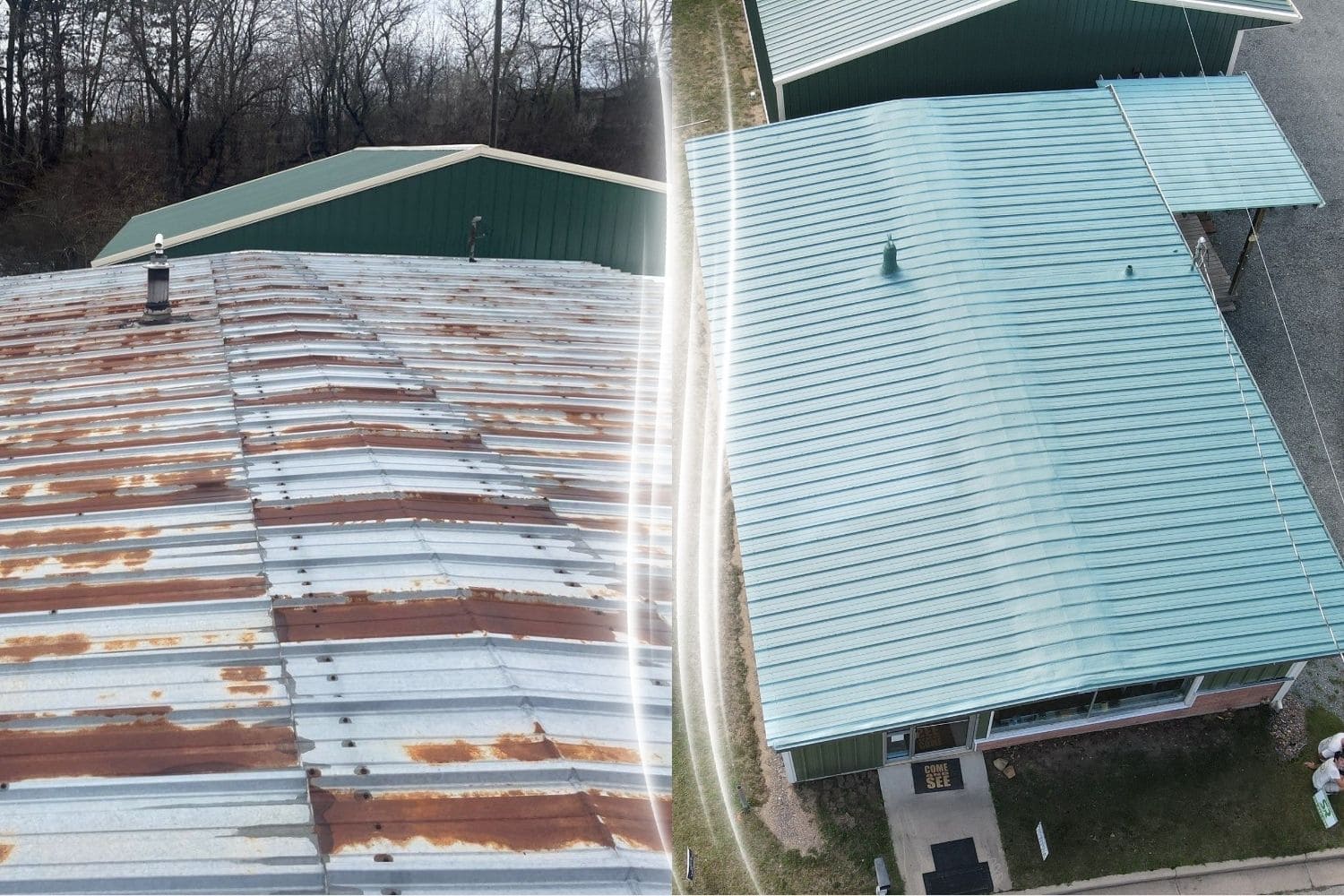
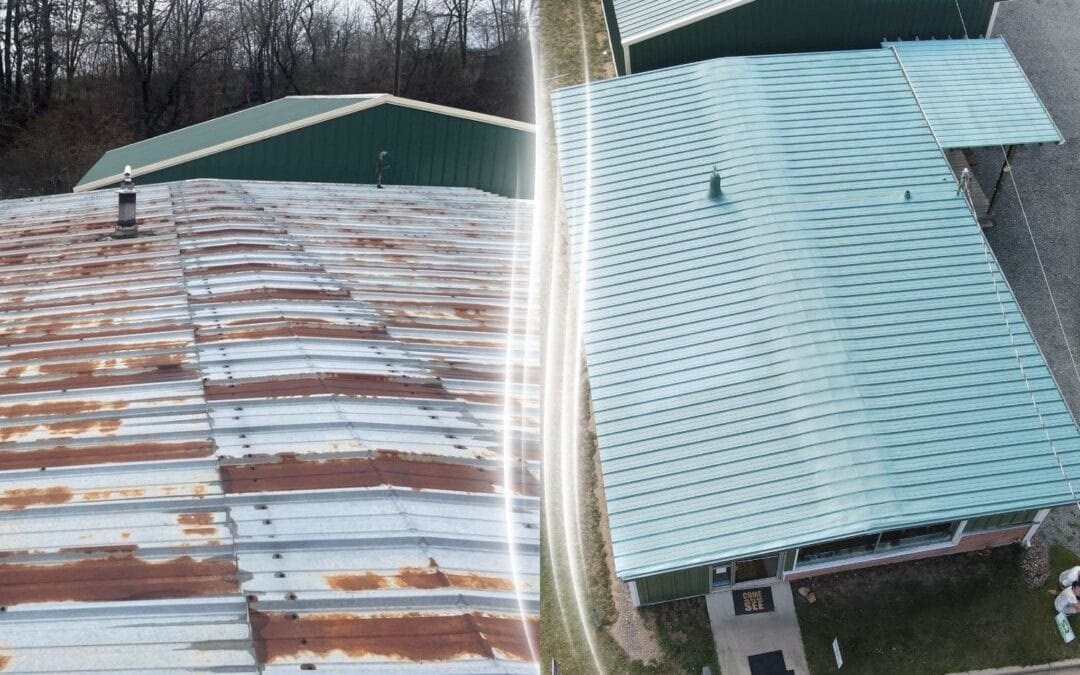
Metal roof transformation: from rusty metal to clean, coated, and restored metal roof.
Once installed, the coatings and foam used in a metal restoration system offer several pros:
Coating Pros
Flexibility
Coatings are designed to stretch without cracking as the metal under them expands and contracts with temperature changes.
Seamless
Coatings form a continuous surface—no seams, no joints, no weak spots for leaks to easily form, no edges or ridges to catch water.
UV resistance
Topcoat reflects UV rays which slows material degradation and reduces surface temperature by up to 50°F on a hot day to lower energy expenditures.
Spray Foam Pros
Strength
Spray foam protects against harsh weather like hail and also strengthens the structural integrity of a roof.
Insulation
Spray foam prevents heat transfer which helps heat the building in the winter and cool the building in the summer – hello energy (and money) savings!
Runoff control
Spray foam can be used to re-slope a roof so that water runs off the roof into drains instead of ponding water in low points, around the edges, or in the corners of the roof.
Now for some cons…
Cons
Lack of Expertise
Spray-on roof systems and specifically metal restoration systems are specialized roof systems that few roofing companies offer. At SR Commercial Roofing, our specialty and primary roof system is spray-on roofs, although we do also install metal and rubber roofs when those are the best option for the building or the preferred option by the owner.
However, most roofing contractors in our area do not even offer spray-on roofs. Even large companies in the area like Ledegar and Interstate Roofing do not offer spray-on systems choosing instead to focus on metal and rubber roof installations for commercial buildings.
Too Much Deterioration
When a metal roof has rusted for long enough that it is no longer safe to walk on, then a metal restoration will not be possible and new metal sheets will (at a minimum) need to be installed in sections where the roof has failed structurally before applying any coatings.
So, to sum up, if you choose a spray-on metal restoration, it limits which companies you can hire for the job since not every roofing contractor offers spray-on metal restorations. And the roof must be inspected to check that it has not deteriorated beyond restoration’s reach.
The benefits of a restored metal roof are flexing with changing weather, waterproofing your roof, and reflecting damaging UV rays away from the building. When spray foam is added, you get additional strength, insulation, and improved water runoff.
The Business Case: Downtime and Sustainability
Now that we have discussed the material advantages of a spray-on system, let’s wrap up by discussing some other pros from a business side: downtime and sustainability.
Downtime
Downtime in your business costs money but so does a leak when it damages business property, equipment, and products. So sometimes, you have to spend the money to fix the leak, but minimizing potential downtime would be a pro.
A metal roof restoration requires less (and typically no) downtime than installing a new metal or rubber roof. Most metal restorations require no tear-off, and, since the installation primarily consists of spraying coatings, there is little danger of foul weather getting into the building or parts flying off the roof during installation.
It is a quick installation with minimal noise, debris, and therefore minimal business interruption.
Sustainability: Waste & Energy
Every metal roof that’s restored instead of replaced keeps thousands of pounds of debris out of landfills because there is no tear-off for most metal roof restorations.
Spray foam increases R-value (aka heat resistance), cutting energy consumption. A study at a university in Texas found that they saw a 30% drop in energy bills after installing spray foam on their roofs. Additionally, topcoat reflects heat from the sun lowering energy bills.
Roof repairs and replacements are expensive, so it is a breath of fresh air when the expense becomes an investment with returns.
If you have questions about spray-on roofing systems or would like your roof inspected, you can call our owner, Warren, at 608-844-4933, email him at warren@seamlessroofsllc.com, or fill out the form on our Contact Page.
We look forward to hearing from you!