
Spring is the perfect time for a roof checkup. As the snow melts, you can see what winter has done to your roof with its freezing temperatures, harsh winds, and ice—and fix small issues before summer storms make them emergencies.
But what do you need to look for?
Leaks show up as stains, ice-dam issues as soft spots, and condensation problems as rust or mold.
We’re going to cover a spring checklist that you can follow to ensure you don’t miss anything important. We’ll cover…
- Ground-level & interior checks
- Roof cleaning
- Detailed roof inspection
- Leaks or condensation?
- Planning
…and if you want a printable checklist you can scroll to the end, copy the condensed version, and print it off!
Step 1: Ground-level and interior checks
Before anyone climbs a ladder, check the inside of your building and then scan the roof from ground level.
Interior walk-through
- Look for fresh ceiling stains, bubbling paint, or discolored tiles—especially under roof drains, rooftop units, and known ponding areas.
- Check mechanical rooms, top-floor corridors, and areas beneath roof penetrations (vents, stacks, chimneys, skylights) for signs of leaks.
- Note any areas with musty smells, rusted metal, or visible mold—these either indicate a leak or a condensation issue.
Exterior / ground-level scan
- Walk the perimeter of the building and look up at roof edges for:
- Bent or missing metal edge pieces
- Sagging gutters or downspouts that may have been damaged by snowplows or ice
- Check walls for water streaks or efflorescence (white mineral deposits), which indicate overflow from clogged gutters or drains.
Step 2: Roof cleaning
Once the roof is safe and clear to move about on, begin basic cleaning.
- Remove branches, leaves, trash, and winter debris from the roof surface, especially from:
- Around rooftop units and curbs
- Behind parapet walls
- In known ponding or low spots
- Clean around all drains and scuppers:
- Lift strainers and clear any accumulated sludge, leaves, twigs, etc.
- Ensure water can flow freely
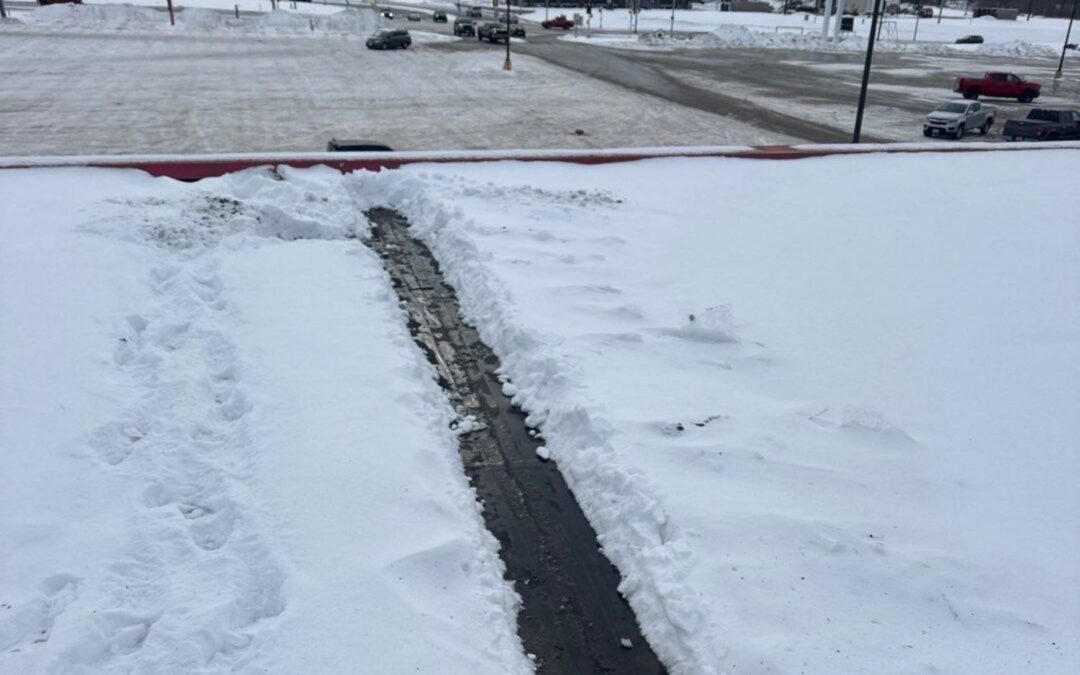
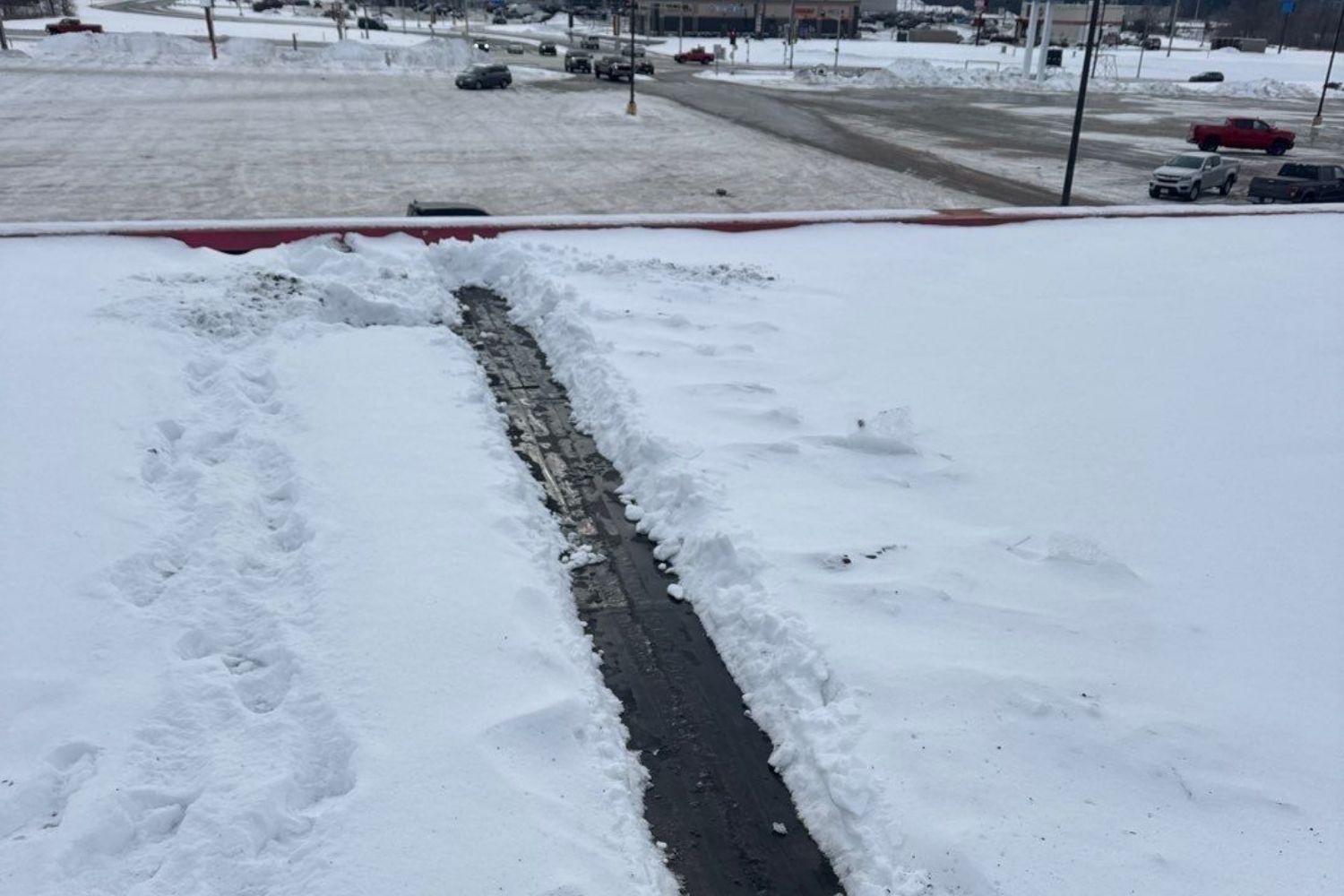
- Clear any leftover ice chunks or compacted snow if you’re still coming out of a late cold snap (BUT do not use picks, axes, or sharp shovels to avoid damaging the roof).
A clean roof makes it easier to see hail dents, cracks, punctures, and seam issues.
Step 3: Detailed roof inspection
Rubber, Tar, & Coated Roofs
- Look for blisters, punctures, cracks, or worn spots in the membrane or coating, especially:
- Along traffic paths on the roof where maintenance crews walk
- Near doorways and roof access points
- Where snow drifts accumulated
- Check for & note ponding areas:
- After a rain, mark where water sits more than 48 hours
- Watch for “rings” or dirt outlines that show where water has been standing (even if it’s dry now).
Metal roofs
- Look for loose or backed-out fasteners, especially along eaves, ridges, and panel laps.
- Check for rust spots and minor corrosion, particularly where snow sat the longest.
- Note any panels that look warped more than usual, which indicates either movement or structural stress.
Seams, edges, and flashing
- Inspect seams for splits, lifted edges, or open laps often caused by temperature swings
- Check flashing around rooftop units, curbs, vents, stacks, walls, and parapets
- Pay attention to dried, cracked, or missing sealant/caulk—harsh winters can cause them to fail quicker.
Step 4: Leaks or condensation?
Spring isn’t just melting snow; it’s also big temperature swings and humidity changes, which can highlight condensation issues.
Distinguishing leaks vs. condensation
- Leaks:
- Usually show up as isolated drips or stains tied to specific roof penetrations or seams.
- Often coinciding with rain or rapidly melting snow.
- Condensation:
- Tends to appear as widespread “sweating” on the underside of a roof.
- Often shows up when warm, humid indoor air hits a cold roof surface like during cool nights.
Spring condensation checklist
- Inspect the underside of the roof (where accessible) for:
- Rust spots on metal
- Darkened or damp insulation
- Widespread moisture beads (NOTE: isolated drip points indicate a leak, not condensation)
- Check for insulation gaps, open penetrations, and unsealed openings where warm interior air can escape and hit cold surfaces.
- Consider whether persistent condensation might justify a spray foam system (either interior or exterior on the roof) which can improve the thermal performance of the building and reduce instances of condensation.
Step 5: Planning
The value of a spring checklist is not just finding issues—it’s acting on them before next winter.
Prioritize immediate repairs
- Seal open seams and flashing gaps that present clear leak risks.
- Repair or replace damaged rubber sections or metal panels.
- Address safety hazards, such as loose metal edges or tripping hazards around rooftop equipment.
Evaluate long-term solutions
- If you see repeated patterns—ponding in the same spots, recurring leaks, or chronic condensation—consider a roof repair, restoration, or replacement rather than another round of patching.
- For roof restoration, spray foam and high-performance coating systems can:
- Create a seamless, watertight surface on aging roofs (the coatings)
- Improve insulation and energy efficiency (the spray foam)
- Reduce the risk of future ice dams (see other blogs on ice dams) and condensation issues by moderating temperature differences between the roof and the building (the spray foam)
Document and schedule
- Keep a log with photos, locations, and descriptions of all issues found.
- Work with a commercial roofing contractor to:
- Decide what must be fixed immediately
- Plan summer projects (repairs, restorations, or replacements)
Spring roof checklist (to print & laminate)
Spring Commercial Roof Checklist
- Interior
- Check top floors for new stains, drips, or peeling paint.
- Inspect mechanical rooms and areas under drains and rooftop units.
- Note any musty odors, rust spots, or visible mold.
- Exterior / ground
- Walk the building perimeter and look for damaged metal edges or sagging gutters.
- Note wall staining that could indicate roof overflow.
- Roof cleaning
- Remove debris from the roof surface.
- Clear all drains, strainers, and scuppers.
- Confirm downspouts and gutters are flowing freely.
- Roof inspection
- Check for punctures, cracks, and blisters.
- For metal roofs, check for loose fasteners and rust.
- Inspect seams and flashing at walls, curbs, vents, and stacks.
- Look for ponding areas & mark spots where water lingers.
- Condensation
- Inspect the underside of the roof (where accessible) for widespread moisture or rust.
- Look for signs of wet insulation or cold spots above heated or humid spaces.
- Planning
- List and prioritize immediate repairs.
- Schedule a professional commercial roof inspection if you find leaks, ponding, or recurring trouble spots that you want a long-term fix for.