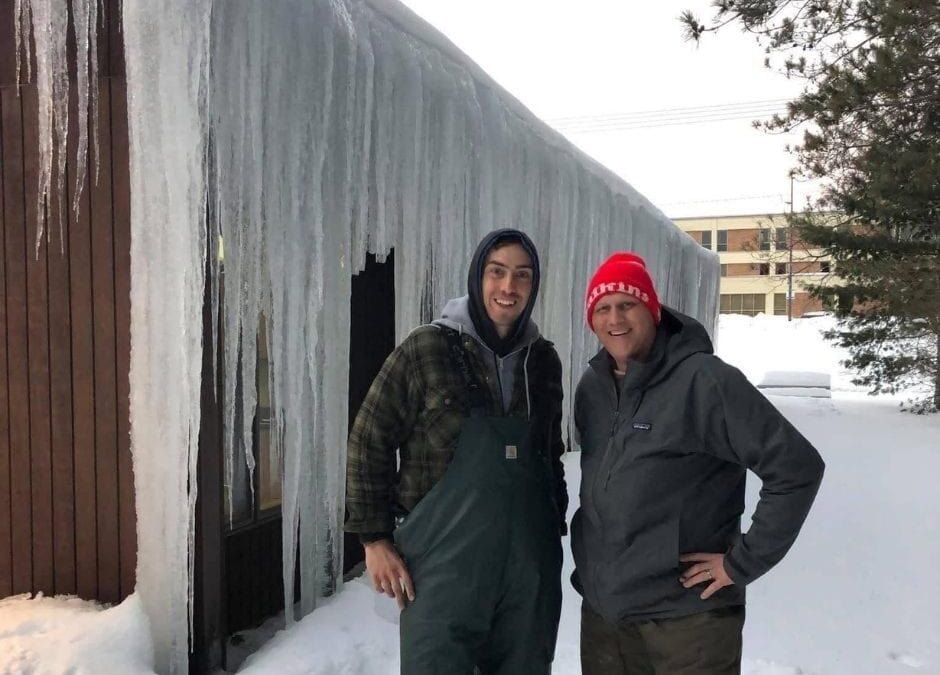
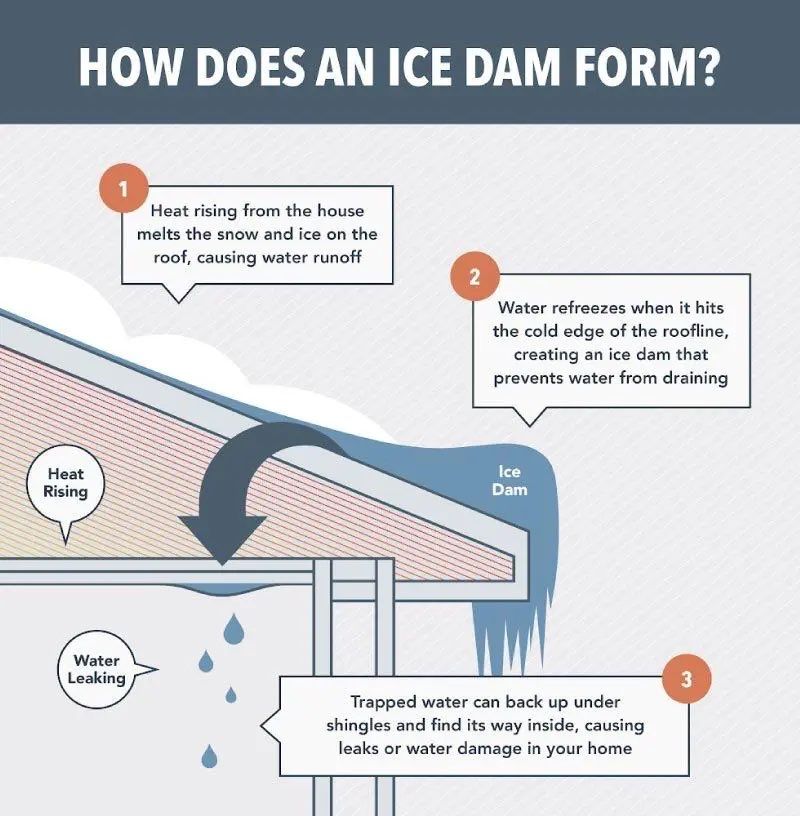
Ice dams on commercial roofs form when heat escapes the building and melts some of the snow, but poor drainage and cold temperatures cause the snowmelt to refreeze at cold roof edges.
When this cycle repeats, thick ridges of ice (the ice dams) are created at the edges of the roof which trap freshly thawed water and allow it to sit on top of the roof. On flat and low-slope commercial roofs, trapped water can quickly turn into leaks, structural damage, and safety hazards for people walking below.
What is an ice dam?
An ice dam is a ridge or mass of ice that forms along roof edges, over gutters, and around drains and penetrations, blocking normal drainage of melting snow and ice. On commercial flat roofs, ice dams often show up as thick ice rings around drains, scuppers, parapet walls, and low spots where water normally flows off the roof.
When melted snow hits these ice “walls,” it backs up and can pond on the roof. Then it finds its way under seams, fasteners, and flashing details and into the building. That turns a cold-weather nuisance into active leaks inside offices, warehouses, and production areas.
Why do ice dams form on commercial roofs?
Commercial ice dams are mostly a heat and drainage problem, not just a snow problem. Common causes include:
- Heat escaping through the roof from poorly insulated decks, penetrations, and wet insulation, which warms some areas of the roof and melts snow even when temperatures are below freezing.
- Cold roof edges and drains at parapets and eaves (colder than the warms spots on the roof), where melted snow refreezes into ice
- Blocked drains and scuppers from leaves, roofing debris, and organic buildup that cause water to pool and freeze into thick ice masses.
- Freeze–thaw cycles in Midwest winters, where daytime sun or building heat melts snow, and overnight cold locks that water into solid ice before it can drain off the building.
Roof spray foam and high-performance coatings—like those SR Commercial Roofing installs—help resolve the underlying issues by improving insulation which reduces the amount of snow melting on the roof and creates a seamless, watertight surface that is far more resistant to leaks when water does back up.
Dangers of ice dams
Ice dams are not just cosmetic: they’re a risk to your building, your budget, and your people.
Roof leaks and structural damage
- Backed-up water can enter through seams, fasteners, penetrations, and aged flashing, soaking insulation and roof decks.
- Saturated insulation loses R‑value (its heat resistance), rots decks, and can weaken structural members over time, especially on older and low-slope roofs.
Interior damage and business disruption
- Leaks stain ceilings, damage inventory, corrode electrical systems, and compromise HVAC equipment if they sit on the roof or just below it.
- Moisture intrusion promotes mold growth, which can impact indoor air quality and force expensive remediation or downtime.
Safety hazards and liability
- Falling icicles and chunks of ice are a real danger near doorways, loading docks, and walkways.
- Ice buildup around rooftop equipment and access paths makes winter maintenance more hazardous and can increase slip-and-fall risks for your crew and vendors.
Investing in prevention and safe removal is usually far cheaper than repairing a soaked roof system or dealing with interior and liability claims after a thaw.
Safe vs. risky ice dam removal methods
Not all removal methods are created equal—especially on commercial buildings.
Safer removal approaches
Professional steam removal
- Low-pressure steam is widely recognized as one of the safest ways to remove ice dams without damaging roofing materials.
- Steamers melt ice in a controlled way, restoring drainage at drains, scuppers, and edges while protecting membranes, coatings, and shingles.
Targeted snow management
- Carefully removing the top layer of snow in problem areas reduces the meltwater feeding the ice dam without scraping or gouging the roof surface.
- On commercial roofs, that often means clearing around drains, scuppers, and known low spots rather than trying to lay bare the whole roof.
Professional inspections during/after removal
- A trained commercial roofing crew can identify compromised seams, ponding areas, and insulation issues while they’re dealing with the ice, so you can address root causes—not just symptoms.
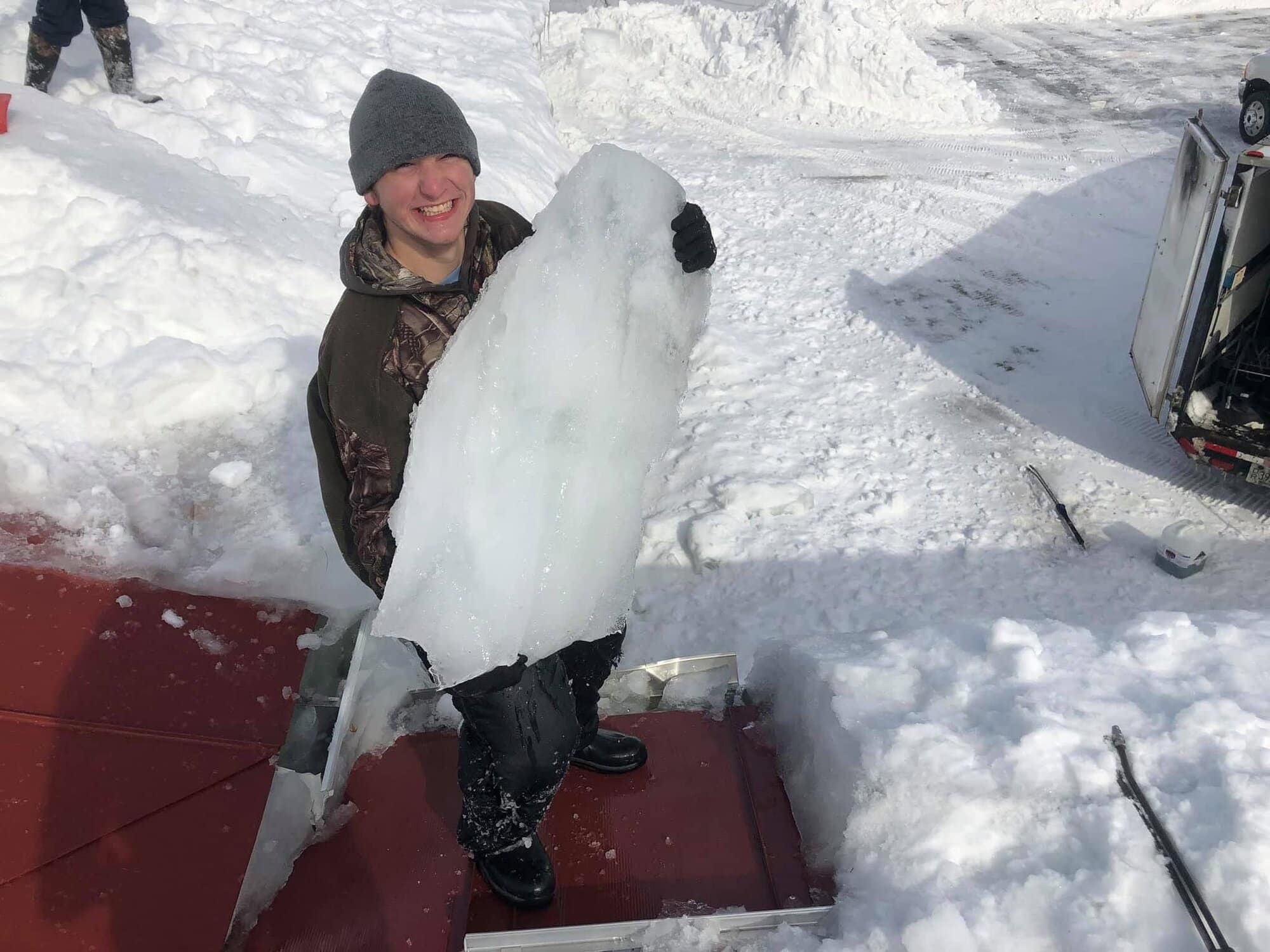
SR crew removing ice dam.
Risky DIY or “quick fix” methods
Chipping, hammering, or prying ice
- Using shovels, axes, or hammers on ice can puncture membranes, crease metal panels, and break flashing, turning a minor ice dam into a major leak when the thaw comes.
- Dropping big ice chunks off a roof can also damage gutters, vehicles, landscaping, and anything (or anyone) below.
Pressure washers and harsh chemicals
- High-pressure washing can force water under membranes and into seams, and it can strip protective coatings from the roof surface.
- Some de-icing chemicals can corrode metal, discolor membranes, or contaminate nearby landscaping and storm systems if misused.
For most commercial facilities, the safest policy is: your staff clears what they can safely from the ground and walkable areas, and a professional commercial roofing crew handles the ice itself. If you need help with removing ice dams, contact SR Commercial Roofing at 608-844-4933 for inspections and servicing.
To help prevent ice dams from forming, read our checklist below👇
Practical winter checklist for maintenance heads
After every significant snowfall, visually check the roof (or use drone footage) for:
- New ice rings around drains or scuppers
- Snow drifting against parapets and equipment
- Ponding water that later freezes into solid sheets
At least monthly in winter:
- Confirm drains and scuppers are clear of debris, leaves, and trash.
- Log any recurring ice locations; recurring issues usually point to insulation, slope, or drainage design problems that may warrant further investigation.
When you see:
- Interior leaks that appear only in winter, icicles over entrances/loading docks, or “mystery” ceiling stains during cold snaps, schedule a commercial roof inspection and professional ice dam removal before the next thaw.
How SR Commercial Roofing can help
SR Commercial Roofing offers safe, professional ice dam and snow management support for commercial buildings.
Beyond ice dam removal, SR specializes in restoring and protecting commercial roofs in the Wisconsin-Minnesota-Iowa region with spray-on coatings and spray foam systems, which help reduce the formation of ice dams.
Here’s what a typical service approach looks like:
Fast winter inspections
- A site visit (or drone inspection where appropriate) to assess where ice is forming, how water is moving on your roof, and whether drains, scuppers, or gutters are blocked.
- Documentation of any damage already occurring—wet insulation, ponding areas, failing seams—so you can budget and plan repairs before spring.
Safe ice dam removal for commercial roofs
- Use of low-pressure, professional-grade equipment and techniques (such as steam) designed for roofing, not concrete, to gently remove ice around drains, edges, and critical details.
- Careful snow and ice management around rooftop units, access paths, and parapets to restore drainage without tearing up your existing roof.
Long-term prevention strategies
- Recommendation of spray foam or coating-based restoration systems to improve insulation, seal seams, and create a seamless, highly reflective surface that sheds water and reduces heat loss.
- Guidance for your maintenance team on winter roof checks: keeping drains clear, watching recurring ponding spots, and knowing when to call in help before a small ice ring becomes a big leak.
If you manage a facility within a few hours of Sparta, WI and are seeing ice buildup, icicles, or unexplained winter leaks, you can request an inspection or ice dam mitigation plan here or call Warren at 608-844-4933 for free inspection and quote.