
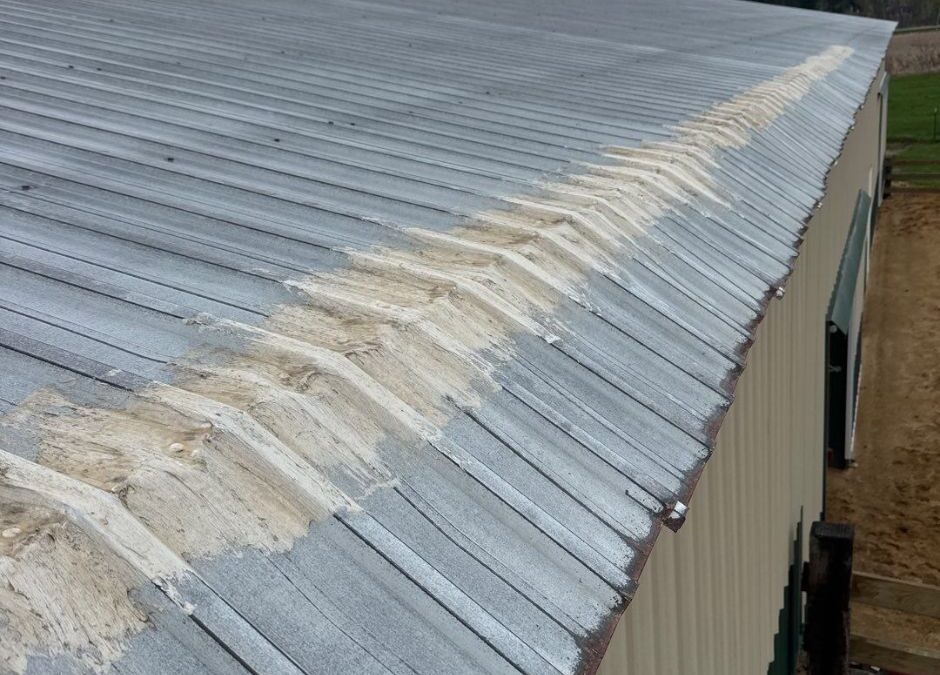
Keeping a commercial roof in working order is MUCH easier when you have a plan to follow.
In the Midwest, the temperatures swing between -60 and 100 degrees causing expansion & contraction, heavy snows weigh down the roof, winds of 70mph periodically try to peel up roofing materials (with a tornado thrown in here and there), and spring storms pop up to throw hail at you once in a while.
To fight all that weather, you need a roof maintenance schedule that explains what to check and when so that you can avoid nasty surprises like leaks, mold, and structural damage.
Why a maintenance schedule matters
Failure for a commercial roof usually isn’t a sudden cave-in.
The roof breaks down slowly because of clogged drains, missing screws, seams pulling apart (from all that wind!), ponding water, or minor storm damage. Each one is (on its own) a small problem. However, when no one regularly maintains the roof, they cause leaks (operational disruption), mold (health hazard), and structural damage (safety hazard).
For building owners and maintenance teams, a quarterly maintenance check-in with your commercial roof is the easiest (and cheapest) way to preserve the roof, protect the building, and reduce emergency roof repairs.
Spring roof maintenance
Spring is a critical time to inspect a commercial roof in any state that gets snow like Wisconsin. Snow, ice, and those -40 degree days stress roof materials, seams, fasteners, flashing, drainage components, you (who isn’t stressed by a day cold enough to freeze your beard hairs off?).
After surviving the winter, roofs often show wear – but what’s important to look for?
Exterior inspection
- Look for punctures, cracks, and blisters
- On metal roofs, check for loose fasteners and rust
- Inspect seams and flashing at walls, vents, and other rooftop equipment and look for gaps, holes, cracked caulk, or missing fasteners.
- Note any areas where water lingers or ponds
Drainage
Test drainage to ensure that water flows off the roof.
Clear debris from drains, scuppers, gutters, and downspouts. When drains are blocked, water backs up which causes roof materials to rot, mold to grow, and water to leak into the building.
Interior inspection
Water damage inside the building means you either have a leak or a condensation problem.
Look for stains, drips, and damp insulation inside the building. Document any findings with notes and pictures so that you can track repeat offenders and track down the source. Your notes should include the extent of the moisture (all across the ceiling or in one location?) and the weather that caused the moisture (rain, melting snow, temperature changes?).
Click here for a more thorough Spring roof checklist.
Summer roof maintenance
During the summer, it is a good idea to check the roof after a week of hot days and after storms. Roofs can peel, crack, and rust during hot July days, and obviously storms can cause damage too!
Exterior inspection
- Cracked coatings/rubber
- Blisters (bubbles in the membrane or coating that could pop and cause a leak)
- Worn areas (from foot traffic or ponding water)
- Rust
These issues are not urgent, but they indicate areas that may become problematic. You will want to keep an eye on them because UV, heat , storms, and harsh winters can further weaken those areas.
Inspect rooftop equipment
Rooftop units, vents, pipes, and skylights are common leak points. Since summer offers the best outdoor weather, it’s the prime time to check that those seals are intact, that the flashing around them is sealed to the roof, and that no screws have backed out so that water can’t seep into the building around them.
Fall roof maintenance
Time to prep for winter! Time to clean, inspect, and reinforce the roof before the snow flies.
Clean
Remove leaves, sticks, dirt, and mud from drains. Power wash the rest of the roof to remove dirt, leaves, and mold.
Inspect
Check areas you’ve been struggling with first – leaks, ponding water, wet insulation, cracks.
Then ensure that seams appear sealed (fasteners intact and tightened), that flashing is flush against the roof, and that low spots where water tends to collect are not deteriorating.
Record the location of any problems (such as warped panels or seams pulling apart) with notes and pictures. If repairs are needed, perform a quick patch before winter with some caulk and coatings or call a professional roofer. Then plan to get an inspection in the spring to explore your long-term options like a roof replacement or a roof restoration.
Reinforce
Wind and weather loosen fasteners which allow panels to warp and seams to pull apart. Bring your drill up with you, a bucket of extra screws, and a caulk gun. Then tighten any loose fasteners, replace missing ones, and caulk over the fasteners to protect against rusting and to stop water from entering the building.
Fasteners often cause leaks because water slips in around them. Caulking over them gives extra protection against leaks for the winter months and the spring thaw.
While checking the fasteners, also check for warped panels or seams pulling apart, and record the location of any problems with notes and pictures.
Winter roof maintenance
Winter roof care is mostly observational. In Wisconsin, getting up on the roof is often treacherous, so primarily monitor from ground level if you’re in a snowy area. If you do go up on the roof, choose a clear, warm day.
Ice and snow
Heavy snows and ice dams cause most of the issues for roofs during the winter.
Check snow depth to make sure the weight of the snow is evenly distributed, and check drains for ice dams. If you have ice dams, either carefully remove them yourself (use caution because it is easy to puncture or damage the roof when removing ice dams – follow our guide here) or call a professional roofer.
Interior – monitor for leaks
Pay attention to ceiling stains (leaks), dripping around walls (leaks), moisture on ceilings (leaks or condensation), or damp insulation (leaks or condensation).
Document any instances of water damage with pictures and a brief note about the weather (rain, snow, wind, temperature changes) that occurred around the time of the damage. Depending on the type of damage and weather at the time, it could be a leak or condensation.
For extra tips on beating winter problems specifically, read “Overcoming 6 Common Winter Roof Challenges.”
How often should I inspect my commercial roof?
At a minimum, commercial roofs should be inspected and maintained by your team at least twice a year, typically the spring and fall are the most critical check-in times.
You should perform extra inspections after large storms (high winds, heavy snowfall, lots of rain, hail), when a leak is noticed, or to check on rooftop units.
A simple habit that pays off
Regular roof maintenance is a simple way to stay ahead of roof troubles and avoid surprises. Whenever you can, pair roof maintenance with seasonal HVAC checks, lighting inspections, or other facility tasks so its part of your normal maintenance routine rather than an afterthought.
Skip the exciting emergencies and do a little boring prevention.
